

Which Timber is Right for Your Bespoke Joinery? A Guide to the Timbers We Use
One of the most common questions we are asked during the enquiry process is which timber we recommend for a particular project. It is a great question, and the honest answer is that it depends on several factors: what the joinery is being used for, whether it is internal or external, the finish you want to achieve, and the character of the property. At GK Joinery, we work with a carefully selected range of sustainably sourced timbers, and every choice is made with the long-term performance of your joinery in mind. Here is a straightforward guide to what we use and why. You can find further technical information on our timbers information page.
Accoya: Our First Choice for External Joinery
Accoya has become our preferred timber for external doors and is also used for casement and sash windows. It is not a naturally occurring species but a modified softwood that has been acetylated to transform its performance characteristics. The result is a timber that is trusted not to visibly swell, shrink, or distort, with minimal movement even through significant changes in temperature and humidity. It holds paint exceptionally well, is independently rated as Durability Class 1, and is both FSC-certified and Cradle to Cradle Gold certified.
Accoya comes with a 50-year guarantee and GK Joinery has been accredited under the trained users of Accoya scheme. For the vast majority of external joinery projects requiring a painted finish, Accoya is our recommendation and our standard. You can read more about our sustainability credentials here.
Red Grandis: Our Standard Hardwood for Painted Exterior Products
Red Grandis is a high-grade, naturally durable hardwood and is GK’s preferred timber for casements, window frames, and door frames where a painted finish is specified. We manufacture joinery from engineered Red Grandis, which makes it a particularly stable product and reduces the risk of movement over time. It is 100% FSC-certified, fully traceable to source, and grown in responsibly managed forests, making it a genuinely sustainable hardwood choice. Its even, consistent grain and pale colouring make it an excellent base for spray-applied finishes. Take a look at our spray finishing page for more on how we finish Red Grandis joinery.
Oak: Timeless Character for Heritage and Internal Joinery
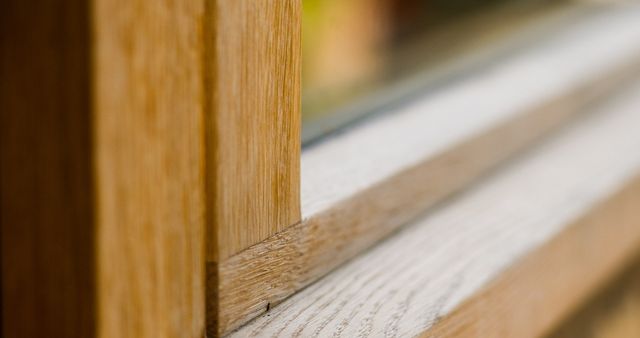
Oak is one of the most desirable building materials available and needs little introduction. It naturally possesses a pleasing golden colour that mellows to a warm silvery tone when left untreated externally. At GK Joinery, we use oak for doors, windows, staircases, and other internal joinery. When used externally, regular maintenance of any applied coatings is important to protect the timber and preserve its appearance. Oak is particularly well suited to bespoke and heritage joinery where its natural grain and warmth are a key part of the aesthetic. Browse our bespoke heritage gallery to see oak joinery in context.
Iroko: A Durable Hardwood for Gates and External Applications
Iroko is a medium to coarse-textured hardwood with an interlocked grain and a light brown to deep golden-brown colour that is often compared to teak. It is tough, dense, and very durable, making it well suited to external applications where robustness is a priority. We commonly use Iroko for gates, and it is a strong choice wherever a naturally weather-resistant hardwood is required.
Sapele: A Class One Hardwood for Doors and External Joinery
Sapele originates from Central Africa and has a distinctive dark red colour with a tight, consistent grain that resembles mahogany. It is a Class One hardwood, meaning it is one of the most naturally durable species available, and significantly more resistant to decay than softwood alternatives. We use Sapele for cills and thresholds, where durability and resistance to wear are particularly important.
Choosing the Right Timber for Your Project
Selecting the right timber is something we are always happy to discuss in detail. The best starting point is a conversation with our team, either by contacting us directly or by visiting our Stroud showroom, where you can see and handle examples of our work. Our brochure and downloads page also contains further technical specifications.
Questions and Answers
Can I request a specific timber that is not listed above?
We work primarily with the timbers described above because we have confidence in their quality, sustainability credentials, and performance in the joinery we manufacture. If you have a specific requirement, we are happy to discuss it, though our starting point will always be to recommend the most appropriate material from our established range rather than specifying something untested.
Is softwood ever used for external joinery?
Redwood pine has good insulation properties and can be used for both internal and external joinery. However, for external applications we generally recommend Accoya or Red Grandis in preference to softwood, as both offer significantly better durability and dimensional stability over the long term.
How do I know whether to choose Accoya or Red Grandis for my project?
Both are excellent choices for painted external joinery. As a general guide, Accoya offers the highest possible durability and dimensional stability, particularly where joinery is highly exposed to weather, and is our preference for external doors. Red Grandis is an outstanding engineered hardwood and our standard specification for window frames and casements. Our team will always advise on the most suitable choice for your specific project and property.